Goal of the project

We are Eyeron Meyeden, a team specialised in the field of computer vision.
The goal of the project is to inspire new generations to be happier. By using selective filters in the population, we can ensure that the happiest people survive therefore the genetic pool of the human race contains much more happier genes. To be able to breed the correct individuals, we are programming an algorithm to detect and classify people by their emotions. We can then sort the happiest people and let die the saddest and angriest.

HAPPINESS WILL PREVAIL! :)

Jokes apart, our goal is to learn. We want to learn about how emotions are reflected on the faces of people. If we are able to detect smiles, we can use it in remote photography by making the camera take the picture when everyone in the frame is wearing its best smile. Furthermore, additional expressions like fear or anger can be used to evaluate real responses in truth test, making them more reliable even if the subject can mask its feelings.

Applications

Psychology Computer Science
Collect psychophysiological data to answer complex questions Incorporating emotion detection into machine learning models of languages
Medical Bussiness
Pain detection using facial expression analysis Predicting customer preferences from emotional responses with facial expression analysis
Education Communications
Investigating how student emotions shape learning Use quantitative data to understand how communications are sent and received

Database

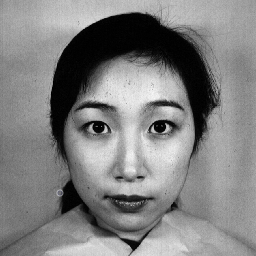
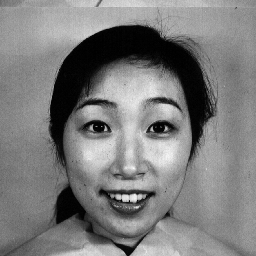
We use the Japanese Female Facial Expression (JAFFE) database which contains 213 images of 7 facial expressions (6 basic facial expressions + 1 neutral) posed by 10 Japanese female models. Each image has been rated on 6 emotion adjectives by 60 Japanese subjects. The database was planned and assembled by Michael Lyons, Miyuki Kamachi, and Jiro Gyoba.
This database allows us to compare images of the same person with different expressions which give us the possibilities to extract the main characteristics of every emotion by analyzing the differences between images.
Further information on the JAFFE database can be found here.